title: "Headless Odoo: Using Odoo as a Backend for High-Performance Next.js B2B Portals" category: "Custom Software" date: "2026-04-03T10:00:00Z" author: "Alex Mercer" readTime: 6 excerpt: "Learn why forward-thinking enterprises are decoupling Odoo's backend from its frontend, leveraging Next.js to build incredibly fast, custom B2B portals."
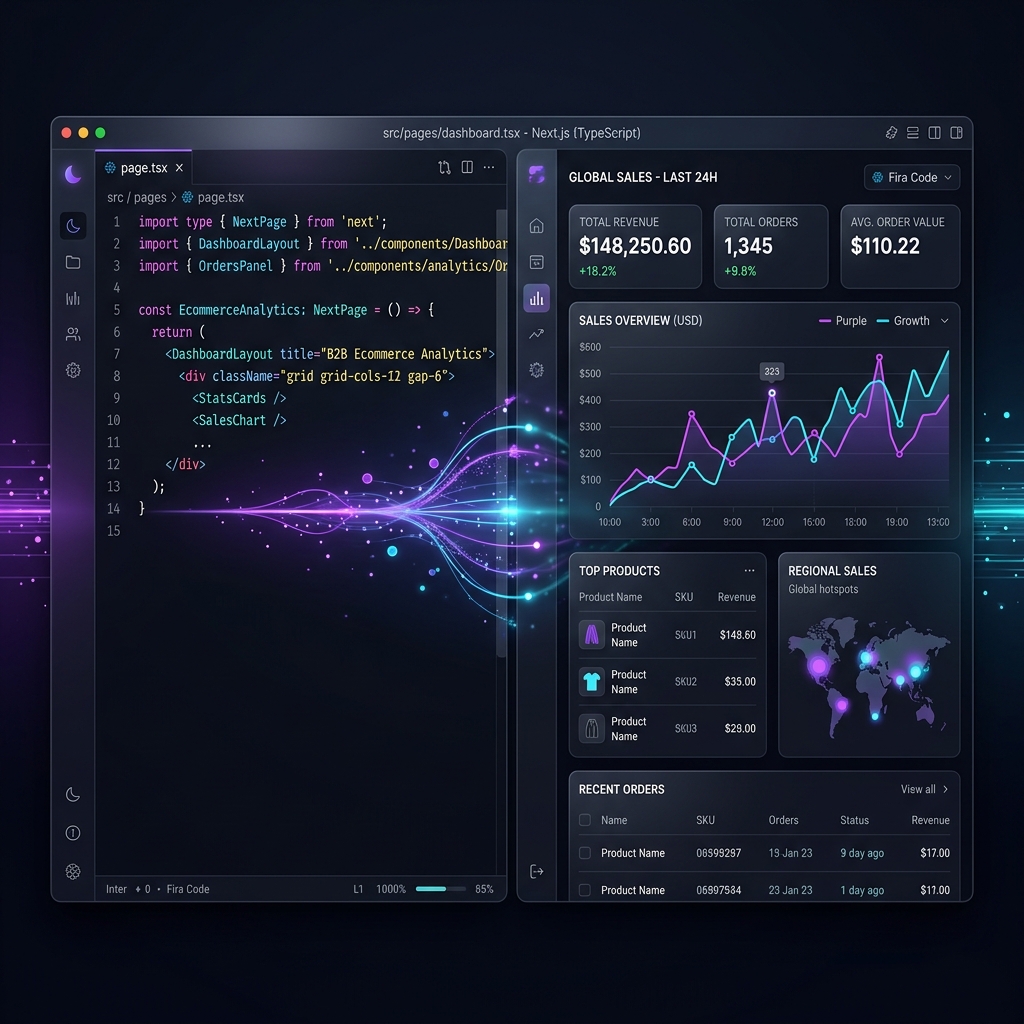
When scaling an enterprise ecommerce platform or a complex B2B portal, engineering teams often face a difficult choice: Do you use the monolithic architecture of your ERP's native website builder, or do you build something fully custom from scratch?
At Dymaxel, we engineer a third option: Headless Odoo paired with Next.js.
This architecture uses Odoo strictly as a robust backend for logic, database handling, and business rules, while utilizing Next.js to serve an incredibly fast, highly optimized front-end experience.
Why Decouple Your ERP Frontend?
Odoo's native website builder is fantastic for standardized deployments, but for rapidly scaling enterprises, a monolithic approach introduces constraints:
- Performance Ceilings: Server-side rendering (SSR) of complex ERP data blocks can slow down Time-to-First-Byte (TTFB), hurting enterprise SEO scores.
- Design Limitations: Pushing the boundaries of modern UI/UX—such as complex webGL animations or specialized React components—requires heavily patching Odoo's QWeb templating engine.
- Omnichannel Requirements: Modern B2B businesses need to serve data to web portals, mobile apps (React Native), and third-party APIs simultaneously.
The Next.js Advantage
By deploying Next.js as your frontend application layer, we unlock several core engineering advantages:
- Static Site Generation (SSG): We can pre-render product catalogs and standard marketing pages at build time. This results in sub-100ms load times, ensuring maximum SEO visibility.
- Incremental Static Regeneration (ISR): Inventory levels and pricing can be incrementally updated dynamically without a full site rebuild, ensuring customers always see accurate data.
- Edge Reactivity: Middleware running on Vercel or AWS Edge locations can personalize content, manage dynamic authentication, and route traffic globally before the request ever reaches your Odoo database.
Architectural Data Flow
Our standard deployment architecture follows a strict separation of concerns:
- The Client Layer: A Next.js 15+ frontend hosted globally on AWS or Vercel.
- The Middleware API: A custom Node.js bridge that handles caching (via Redis) and rate-limiting.
- The Odoo Backend: A highly secure Odoo 18 instance exposing data strictly via XML-RPC or a custom REST framework.
This structure ensures that sudden spikes in front-end traffic (such as a marketing campaign or a seasonal sales event) never crash your core ERP database. The middleware absorbs the impact.
Is Headless Right for Your Business?
Transitioning to a headless architecture is a strategic play reserved for mid-to-large-market companies where performance directly dictates revenue. If your B2B customers require real-time pricing calculation logic, customized high-speed dashboards, or mobile app parity, headless Odoo is the ultimate scaling tool.
Transform your portal’s performance. Dymaxel operates at the intersection of enterprise Odoo deployment and modern SaaS engineering. Schedule a technical architecture review to see how headless Next.js can revolutionize your business.